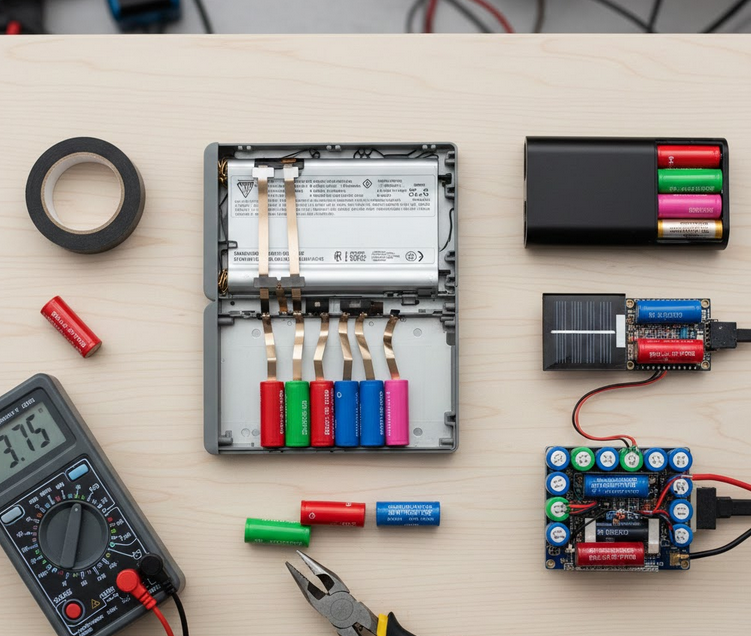
Most people throw away laptop batteries when they stop holding a charge. Usually, only one or two cells in the pack have actually failed. The remaining cells are often perfectly functional and high in quality.
Inside these plastic shells are standard 18650 lithium-ion cylinders. These cells are the backbone of modern portable electronics. You find them in Teslas, power tools, and high-end flashlights.
Why Reuse Laptop Cells?
Sustainability is the most compelling reason to harvest these batteries. Lithium mining is intensive and impacts the environment significantly. By reusing cells, you extend their lifecycle and reduce demand for new raw materials.
Economic savings are another major factor. A single new, high-quality 18650 cell can cost $5 to $10. A discarded laptop battery often contains six to nine of these cells for free.
The Science of Battery Failure
Laptop batteries fail because the Battery Management System (BMS) detects an imbalance. If one “bank” of cells drops below a voltage threshold, the BMS shuts down the entire pack.
This is a safety feature, but it creates “false” waste. While the laptop sees a dead battery, a hobbyist sees a treasure trove. You can often recover 70% to 80% of the original capacity from the healthy cells.
What Can You Power?
The possibilities for these reclaimed cells are nearly endless. They are perfect for low-drain applications like LED lighting or solar power banks. Many enthusiasts build “Powerwalls” to store energy for their entire homes.
Others use them for RC vehicles or portable Bluetooth speakers. However, you must understand the chemistry before you begin. Lithium batteries pack a lot of energy and require respect.
Safety First: Understanding and Extracting 18650 Cells
Extracting cells requires patience and the right tools. You are dealing with stored chemical energy. A short circuit can lead to thermal runaway. This is why safety gear is non-negotiable.
Always wear safety glasses to protect against flying plastic. Use non-conductive tools whenever possible. Work on a fireproof surface like a ceramic tile or a metal tray.
Essential Tools for Harvest
You do not need expensive machinery for this task. A few basic hand tools will suffice for most packs.
Flush cutters: Ideal for snipping thin nickel strips.
Flat-head screwdriver: Helps pry open the plastic seams.
Multimeter: Essential for checking cell health immediately.
Electrical tape: Used to cover exposed terminals.
The Extraction Process
Start by locating the seam of the battery casing. Carefully insert your screwdriver and twist to pop the plastic clips. Avoid shoving the tool deep into the pack. You might puncture a cell or hit the circuit board.
Work your way around the perimeter slowly. Once the shell opens, you will see the cells wired together. They are usually grouped in pairs or triplets.
Managing the Circuitry
The Battery Management System (BMS) is the small green board. It is connected to the cells by thin metal ribbons. Use your flush cutters to snip these ribbons.
Always snip the wires one at a time. Never cut across multiple wires at once. This prevents a short circuit through your metal cutters. After removing the board, dispose of it at an e-waste center.
Identifying Your Cells
Once the cells are free, look at the PVC wrap. You will see a model number printed on the side. Common brands include Sanyo, Panasonic, Sony, and Samsung.
Brand
Common Color
Typical Capacity
Panasonic
Green
2900 – 3400 mAh
Samsung
Pink/Light Blue
2200 – 3000 mAh
Sanyo
Red
2000 – 2600 mAh
LG
Light Grey/Orange
2100 – 3200 mAh
Immediate Safety Check
Check each cell with your multimeter. A healthy cell should read between 2.5V and 4.2V. If a cell reads 0V, it is likely dead.
Cells reading below 2.0V are “low voltage.” These require special care and may be unstable. If a cell feels hot or looks dented, recycle it immediately. Do not attempt to charge damaged cells.
Testing and Grading: Separating Gold from Junk
Not all harvested cells are created equal. Some may hold a full charge, while others lose energy sitting on a shelf. This stage is critical for ensuring the reliability of your DIY projects.
You must identify the internal resistance and actual capacity of every cell. This process is known as “grading.” It allows you to match similar cells together for balanced battery packs.
The Charging Phase
Start by using a dedicated smart charger, such as an LiitoKala Lii-500 or an XTAR VC4. These devices do more than just provide power. They monitor the charging curve and detect “heaters.”
A heater is a cell that turns energy into heat instead of stored power. If a cell feels hot to the touch during charging, stop immediately. These cells are dangerous and should be recycled.
Capacity Testing
Once fully charged to 4.2V, the cell must be discharged to measure its capacity. Most smart chargers have a “NOR Test” or “Discharge” mode. This measures the actual milliamp-hours (mAh) the cell can deliver.
Compare this result to the manufacturer’s original datasheet. A cell is generally considered “good” if it retains 80% or more of its original capacity.
Capacity Retention
Status
Recommended Use
90% – 100%
Excellent
High-drain tools, E-bikes
75% – 89%
Good
Flashlights, Power banks
60% – 74%
Fair
Low-power LED lighting
Below 60%
Poor
Recycle immediately
Measuring Internal Resistance
Internal resistance (IR) indicates the health of the cell’s internal chemistry. High resistance means the cell will struggle to provide high current. It will also sag in voltage under load.
A healthy 18650 cell usually has an IR below 70mΩ. If you see readings above 150mΩ, the cell is aging significantly. Use these only for very low-power applications like a wall clock.
The Self-Discharge Test
This is the final and most overlooked step. After testing, let the cells sit for two to four weeks. Measure the voltage again after this period.
Healthy cells should hold their voltage steady. If a cell drops from 4.2V to 4.0V without being used, it is a “self-discharger.” These cells will drain your entire battery pack if wired in parallel.
Top DIY Projects for Reclaimed Laptop Cells
Once you have a collection of tested, graded cells, it is time to build. The versatility of the 18650 format makes it the “LEGO brick” of the energy world. You can scale your projects from small handheld devices to large stationary storage.
Always use a Battery Management System (BMS) for every project. A BMS prevents overcharging, over-discharging, and short circuits. It is the brain that keeps your DIY battery safe.
Project 1: The High-Capacity USB Power Bank
Commercial power banks often use low-grade cells to save costs. You can build a superior version using empty “DIY Power Bank Kits” found online. These kits include the housing, USB ports, and the charging circuit.
Simply pop in your best-matched 18650 cells. Since laptop cells are often high-capacity (like Panasonic 3400mAh), you can create a 20,000mAh monster for a fraction of the retail price.
Project 2: Off-Grid Solar Lighting
Laptop cells are perfect for outdoor solar lighting. Standard solar garden lights use cheap NiMH batteries that fail quickly. You can replace these with a single 18650 cell and a TP4056 charging module.
This setup can power bright LED strips for hours. It is an excellent way to illuminate sheds, paths, or signs without running electrical wires.
Project 3: The “Powerwall” for Home Storage
Advanced hobbyists build massive battery arrays to store solar energy. By connecting hundreds of 18650 cells in parallel and series, you can create a 24V or 48V system.
Parallel connections: Increase the total capacity (Amp-hours).
Series connections: Increase the total voltage.
These systems can power fans, laptops, or even refrigerators during a power outage. Use “cell fusers” (thin wires acting as fuses) for each cell to ensure maximum safety in large packs.
Project
Difficulty
Key Benefit
Required Safety
Power Bank
Easy
Cheap, high capacity
Built-in kit BMS
Solar Light
Medium
Eco-friendly, bright
TP4056 Module
RC Battery
Hard
High performance
High-current BMS
Powerwall
Expert
Energy independence
Individual cell fuses
Conclusion: A Sustainable Future
Repurposing laptop batteries is more than a hobby. It is a practical contribution to a circular economy. You save money, gain technical skills, and prevent toxic chemicals from entering the environment.
Always remember to treat these cells with respect. Proper testing, grading, and the use of BMS boards will ensure your projects are both powerful and safe.
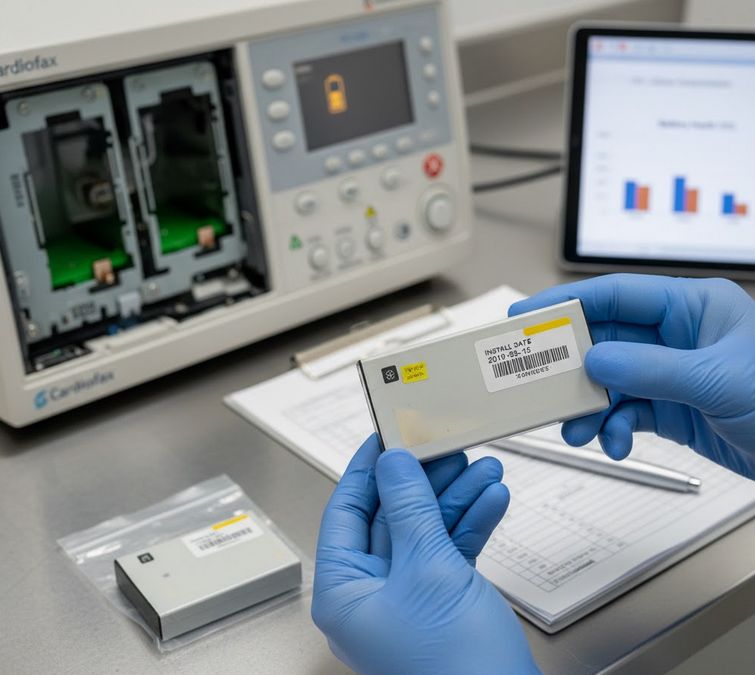
The Cardiofax Electrocardiograph (ECG) is a staple in medical settings worldwide. From routine check-ups to emergency diagnostics, its role is indispensable. Clinicians rely on this device for accurate, immediate heart data. However, a critical component often goes unnoticed: the internal battery. This battery is much more than just a backup power source.
It ensures uninterrupted operation during patient transfers. It handles power surges and temporary outages without fail. A healthy battery guarantees the device is ready instantly, anywhere. When this power source degrades, the entire system’s reliability is compromised. Patient safety, data integrity, and workflow efficiency are all at risk. Knowing the end-of-life signals for your Cardiofax battery is crucial. This article provides essential knowledge for biomedical technicians and healthcare providers. We will explore key specifications, digital warnings, and practical maintenance tips.
🔋 Why Battery Health Matters
A failing battery creates unexpected downtime. It can cause incomplete or corrupted test data. Furthermore, it adds unnecessary stress in high-pressure situations. Timely replacement is a proactive measure against these issues. It safeguards both the patient experience and the significant investment in your Cardiofax unit. This preventative approach is the foundation of dependable medical practice. Ignoring the subtle signs of decay is simply not an option. A reliable ECG hinges on this small, essential power unit.
The Anatomy of a Cardiofax Battery: Specifications and Lifespan
Understanding your Cardiofax battery requires knowing its technical foundation. The battery is usually a Lithium-Ion (Li-ion) or sometimes a Nickel-Metal Hydride (NiMH) cell pack. Manufacturers like Fukuda Denshi often specify the chemistry for optimal performance. These chemistries offer excellent energy density and minimal memory effect.
🔋 Key Technical Specifications
A typical Cardiofax battery operates around 14.4 Volts (V) nominal power. Its capacity commonly ranges between 2.0 Amp-hours (Ah) and 4.0 Ah. This capacity determines the device’s operational time when fully disconnected from AC power. For example, a 3.0 Ah battery provides several hours of continuous use.
These specifications directly impact how long the ECG unit can function. A healthy battery should allow for numerous patient exams on a single charge. Always refer to your specific Cardiofax model’s service manual for exact figures. Using non-approved batteries can lead to functional problems or even safety hazards.
⏳ Expected Lifespan and Cycle Count
Manufacturers generally rate the lifespan based on charge cycles. A charge cycle is a full discharge followed by a full recharge. For a high-quality medical Li-ion battery, the cycle life is often specified at 300 to 500 cycles. After this threshold, the battery’s ability to hold a charge significantly diminishes.
However, calendar life is also a major factor. Even if the device sits idle, chemical degradation occurs over time. Most Cardiofax batteries have a recommended replacement interval of 3 to 5 years. This timeframe holds true even with light use. The unit’s firmware constantly monitors these metrics.
Note: Ambient temperature affects battery life. Operating the unit consistently in very hot or very cold environments accelerates decay. Ideal operating conditions prolong its utility.
📈 Measuring Battery Health
Battery health is measured by its Relative State of Health (SOH). This is a percentage that compares current capacity to the original factory capacity. When SOH drops below 80%, the battery is considered degraded. This is typically the signal for replacement. You might not notice an issue at 85%, but the decline accelerates from there. Technicians often use specialized diagnostic tools to pull this data directly.
Decoding the Warnings: Software Indicators and Error Codes
The most direct way to monitor your Cardiofax battery is through the device’s software and interface. Modern ECG machines are designed to constantly self-diagnose. They provide clear, early warnings of battery degradation. Learning to recognize these specific digital signals is paramount. Ignoring them can lead to unexpected equipment failure.
💡 Interface Status Indicators
Look closely at the battery icon displayed on the screen. It is usually located near the top corner. A full, green icon signals optimal health and charge level. As the capacity drops, the icon changes appearance.
Low Charge Warning: The icon turns yellow or amber. This indicates the charge level is critically low. This might not mean the battery is failing, just that it needs charging.
Service Required Icon: A red X or a wrench symbol overlays the battery icon. This often means the battery’s health (SOH) has fallen below the 80% threshold. Replacement is imminent or required.
Constant Flashing: Rapid flashing can indicate a charging issue. The battery may not be accepting a full charge anymore. This is a common sign of internal cell damage.
⚠️ Specific Error and Status Codes
Cardiofax units often generate specific error codes for technicians. These codes provide definitive proof of battery issues. These messages may only appear during startup or within the system’s maintenance menu.
Code Category
Example Codes (Illustrative)
Indication
Action Required
BATT FAIL
E047, BATT-CHG-FAIL
Charging circuit failure or defective cell.
Immediate replacement.
BATT WARN
SOH-LOW, LOW-CAP
Capacity is below the operational safety margin.
Schedule replacement soon.
BATT TEMP
E048, TEMP-OVR
Battery temperature is too high during charging.
Check ventilation and internal cooling.
Consulting the specific model’s service manual is essential. This is the only way to accurately interpret the codes. Do not simply clear the error code without addressing the root cause. This is a crucial step in maintaining trustworthiness in device performance.
📉 Unreliable Percentage Readings
One tell-tale digital sign is inaccurate or erratic battery percentage readings. The display might jump from 70% to 20% suddenly. Conversely, it might remain at 100% even after extended use off the charger. This erratic behavior shows the battery’s internal management system is confused. It can no longer reliably estimate the remaining capacity. This is often caused by cell imbalance within the battery pack.
Beyond the Screen: Practical, Non-Digital Signs of Battery Degradation
While software warnings are definitive, a trained eye can spot physical and performance clues. These non-digital indicators often manifest before the system officially flags an error. Observing these physical signs enhances the overall expertise in equipment management. They provide an early, practical warning.
🔌 Diminished Runtime
The most common and immediate sign is a significant reduction in operational runtime. When new, a Cardiofax unit might run for three hours unplugged. A degrading battery might only last for one hour, or even less.
Track Performance: Keep a simple log of battery life. Compare the current duration to the original specifications. A loss of 50% or more indicates serious capacity fade.
Faster Discharge: The charge level depletes much more rapidly than before. What used to take 30 minutes now takes 10 minutes. This is a clear signal of reduced charge holding ability.
🔥 Physical Anomalies and Temperature
A failing Li-ion battery can exhibit noticeable physical changes. These changes are crucial safety warnings that should not be ignored.
Excessive Heat: The battery compartment or the charging area feels unusually hot to the touch. This excessive heat during charging or use indicates high internal resistance. High resistance is a common precursor to catastrophic failure.
Swelling or Bulging: Inspect the battery pack casing, if accessible. Any sign of swelling or bulging is an immediate safety hazard. This indicates gas buildup inside the battery cells. The unit must be powered off and the battery safely removed at once.
⚡ Extended Charging Times
Paradoxically, a failing battery can take an excessively long time to reach 100% charge. The internal charging circuitry struggles to manage the degraded cells. Conversely, a battery that reaches 100% charge almost instantly is also highly suspect. This suggests the unit is falsely reporting the charge level. In reality, the battery cannot accept a full charge.
Tip: If the AC power adapter feels much hotter than usual when charging the ECG, the battery is likely demanding excessive current. This strain is a classic sign of internal failure.
🛑 Repeated Calibration Requirements
Some Cardiofax models allow for battery calibration. The process resets the internal fuel gauge to match the actual capacity. If the unit requires repeated, frequent calibration to display accurate readings, the battery is nearing its end. Calibration is a temporary fix, not a solution for chemical degradation.
Proactive Replacement: Best Practices and Maintenance Schedules
The goal of expert equipment management is always proactive maintenance, not reactive repair. Replacing a Cardiofax battery before it fails ensures operational continuity. It strictly adheres to principles of patient safety and equipment trustworthiness. Developing a routine replacement strategy is vital for any clinical setting.
📅 Establishing a Replacement Schedule
Relying solely on error codes can leave you vulnerable to sudden failure. The most dependable strategy involves scheduled, time-based replacements.
Manufacturer Guideline Adherence: Strictly follow the manufacturer’s recommended 3 to 5-year replacement interval. Log the date of installation clearly on the battery or the maintenance record.
High-Use Cycle Tracking: For units used constantly on battery power, track the charge cycles. If usage exceeds the 300-cycle threshold within the first three years, plan an earlier replacement.
Annual Verification: Integrate a functional check into the unit’s annual preventative maintenance (PM) schedule. This check should verify the unit’s ability to run for the minimum specified time.
📝 Best Practices for Battery Handling
Proper care extends the life of a new battery and maximizes your investment.
Avoid Deep Discharge: Do not regularly run the unit until the battery is completely empty. Deep discharges shorten the lifespan of Li-ion batteries considerably.
Temperature Control: Store and operate the ECG in a climate-controlled area. Extreme heat or cold causes faster chemical decay. Keep the unit away from direct sunlight or heating vents.
Inventory Management: Use a First-In, First-Out (FIFO) system for battery stock. This ensures older, shelf-aged batteries are installed first. This minimizes the impact of calendar life degradation on your spares.
✅ Verification After Replacement
Simply installing a new battery is not the final step. The installation must be verified for correct function.
Full Charge Cycle: Allow the new battery to undergo one complete charge cycle. Ensure it charges to 100% within the expected time frame.
Calibration: Perform a battery calibration procedure, if required by the model. This resets the internal fuel gauge to the new, full capacity.
Documentation: Update the maintenance log with the installation date and the technician’s details. This creates an auditable record essential for compliance.
Conclusion
The Cardiofax battery may be a small component, but it holds the key to the device’s reliability. By understanding the digital error codes, observing non-digital warnings, and implementing a proactive replacement schedule, you maintain optimal device performance. This dedication to detail reinforces the highest standards of patient care and operational expertise.
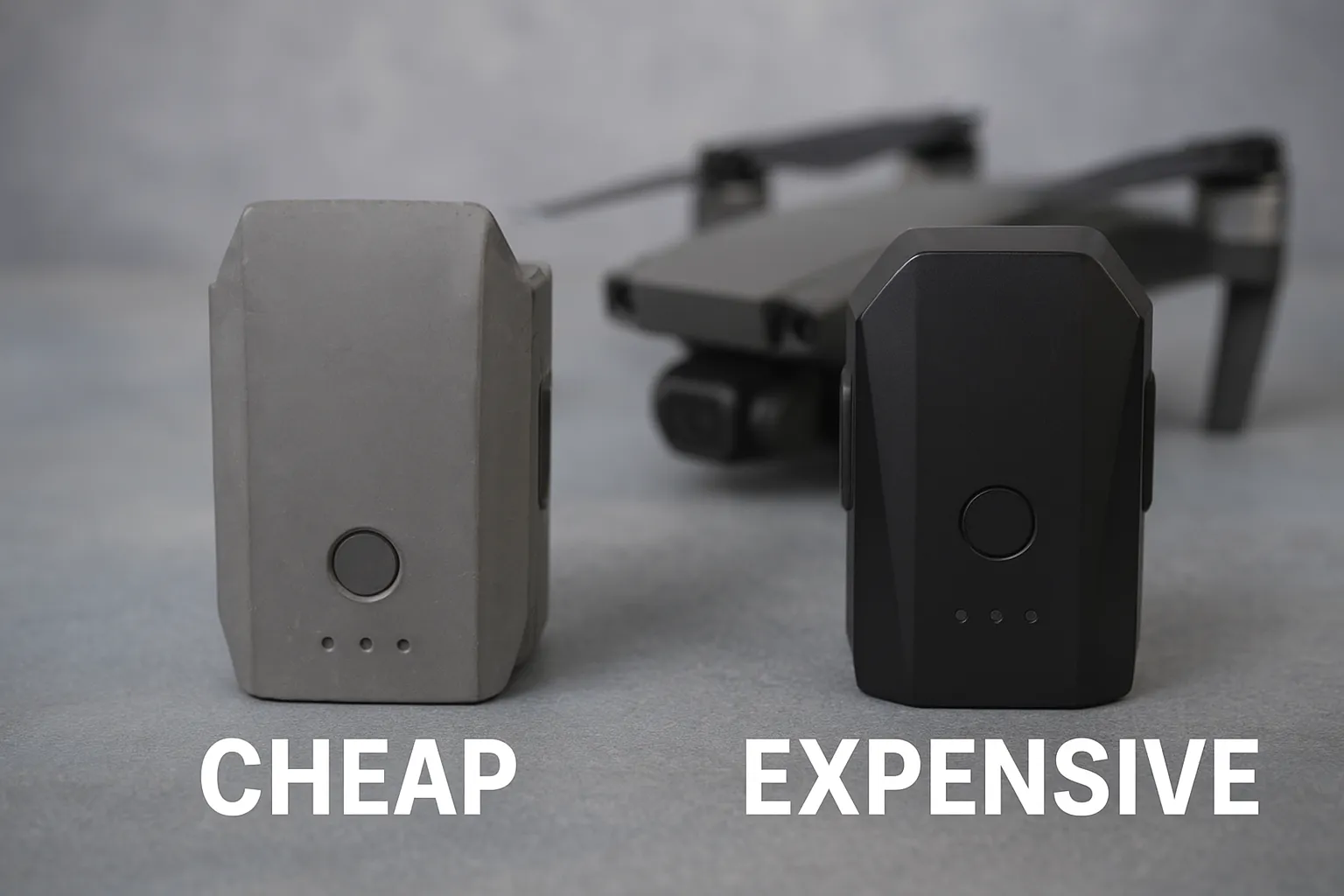
Drones have evolved from hobby gadgets to essential tools in photography, surveying, and logistics. Yet one question still divides pilots — should you buy cheap batteries or invest in expensive ones?
The answer is not as simple as it looks. A drone’s battery isn’t just a power source; it’s the heart that determines how far, how long, and how safely your drone flies. While cheaper options promise affordability, they often sacrifice performance, safety, or reliability. Expensive batteries, on the other hand, are marketed as “premium,” but are they truly worth the extra cost?
To understand this debate, we must explore what drives the price difference. Factors like battery chemistry, build quality, energy density, discharge rate, and brand testing standards all influence cost and performance.
A typical consumer drone battery costs between $30 and $150, depending on its capacity (measured in milliamp-hours or mAh), voltage, and brand. For example, a DJI Mavic 3 battery costs around $209, while a generic third-party replacement may sell for $60 on marketplaces like Amazon or AliExpress. But these price gaps are not random — they often reflect measurable differences in flight stability, heat management, and recharge cycles.
In this article, we’ll break down the key differences between cheap and expensive drone batteries, uncover the real-world impact on flight experience, and help you decide where spending more actually matters.
The Real Price Behind a Drone Battery
The price of a drone battery is not determined by profit margin alone — it’s a reflection of materials, design, and quality control. Every dollar saved or spent affects how your drone performs in the air. Understanding these cost drivers helps explain why some batteries cost twice as much but last three times longer.
1. Battery Chemistry and Material Quality
Most modern drones use Lithium-Polymer (Li-Po) batteries for their high energy density and light weight. But not all Li-Po cells are made equal. Cheap batteries often use lower-grade lithium foil and less stable electrolyte compounds, which can degrade faster under heat or repeated charging.
Premium batteries, such as those used by DJI, Autel Robotics, and Parrot, are built with high-purity lithium materials that maintain better voltage consistency during flight. They also feature smart balancing circuits that keep cells equalized, preventing early degradation.
For instance, tests conducted by DroneDJ found that a low-cost Li-Po battery may lose up to 25% capacity after just 50 charge cycles, while a high-end battery retains 90% capacity even after 100 cycles. That translates into longer usable life and more stable performance over time.
2. Manufacturing Precision and Quality Control
High-end manufacturers invest heavily in precision assembly and automated testing. Each cell is checked for internal resistance, temperature response, and voltage uniformity. Cheap manufacturers often skip or reduce these steps to cut costs, resulting in imbalanced cells and uneven discharge rates.
This can lead to issues like voltage drops mid-flight — one of the most common causes of drone crashes. The Federal Aviation Administration (FAA) reported that nearly 30% of hobby drone malfunctions are related to battery failure or instability.
3. Built-in Smart Features
Another major cost factor is battery intelligence. Expensive drone batteries often come with built-in Battery Management Systems (BMS) that monitor temperature, voltage, and charge cycles in real time. This smart circuitry helps prevent overcharging, deep discharging, and thermal runaway — conditions that can cause swelling or even fires.
Cheaper alternatives typically lack these safety circuits. As a result, users must rely on manual monitoring or external chargers with limited protection features.
4. Certification and Safety Testing
Authentic batteries from reputable brands undergo international safety certifications, such as UN38.3, CE, or RoHS compliance. These ensure the product meets global transport and safety standards. Third-party or clone batteries often skip such certifications, posing risks during flight or storage.
A genuine battery’s higher price covers these mandatory tests and safety measures — something that cheaper units rarely include.
Performance Differences – Power, Flight Time, and Consistency
The true test of any drone battery isn’t in the specs printed on its label — it’s how it performs in the air. Whether you’re a hobbyist capturing weekend footage or a professional filmmaker shooting in harsh conditions, power consistency and flight reliability make all the difference.
Let’s break down how cheap and expensive drone batteries differ in energy output, flight time, recharge stability, and heat management.
1. Flight Time and Energy Density
Flight time is the most noticeable performance metric for drone users. A cheap 4,000mAh battery might promise the same capacity as a premium one on paper, but the real-world results often differ.
Tests by DroneXL showed that a generic replacement battery for the DJI Air 2S delivered around 18–19 minutes of flight, while the official DJI battery achieved 28 minutes under identical conditions. That’s a 47% difference in endurance.
The reason lies in energy density — the amount of energy stored per unit of weight. Premium batteries use tightly layered, high-grade lithium cells that store more energy efficiently, whereas cheaper options often contain lower-density materials and weaker separators, reducing usable capacity.
2. Power Delivery and Voltage Stability
Drones require consistent voltage output to maintain lift and control. When voltage drops unexpectedly, motors can lose thrust, causing unstable flight or sudden descent.
High-end batteries maintain steady voltage curves even under heavy current draw. Their cells discharge evenly, allowing drones to maintain stable flight performance until the final 10–15% of charge.
In contrast, cheap batteries often exhibit voltage sag — a rapid drop in output when the motors draw high power, especially during takeoff or windy conditions. This can trigger low-battery warnings early or cause the drone’s flight controller to reduce power output to protect the battery.
Voltage sag is not just annoying; it’s risky. For FPV racers or aerial photographers, a few seconds of voltage drop can mean loss of footage or a crash.
3. Heat Management and Efficiency
Every battery generates heat during discharge. The difference lies in how well it handles it. Expensive batteries often incorporate advanced cooling designs and thermal protection layers that minimize overheating.
DJI’s Intelligent Flight Batteries, for instance, use built-in temperature sensors that automatically adjust performance when the pack gets too warm or cold. Cheap alternatives rarely include such sensors, making them more vulnerable to thermal swelling or cell damage during long flights.
Excess heat accelerates chemical wear inside the cells, reducing lifespan dramatically. According to Battery University, each 10°C increase in temperature can halve a Li-Po battery’s cycle life.
4. Recharge Stability and Cycle Life
A battery’s ability to hold charge over multiple uses — known as its cycle life — defines long-term value. Premium batteries typically maintain 80–90% capacity after 100–150 charge cycles, while cheaper units drop below 70% after 50–60 cycles.
Smart charging technology in expensive batteries also helps balance cells automatically, preventing uneven charging that shortens battery life. Many cheap chargers lack this precision, causing one cell to degrade faster than others.
5. Real-World User Experience
Professional drone operators often report noticeable differences in flight confidence. With genuine brand batteries, voltage readings are accurate, flight controllers communicate reliably, and emergency landing features work as intended.
In contrast, cheap third-party batteries can cause firmware compatibility issues, such as inaccurate charge percentages or random shutoffs mid-flight. Some even fail to communicate correctly with the drone, forcing manual estimation of flight time — a serious safety concern for aerial work.
Safety, Lifespan, and Brand Reliability
When choosing between cheap and expensive drone batteries, safety and reliability often outweigh every other factor. A drone battery failure can lead to a crash, damaged equipment, or even fire. Understanding the engineering behind safety design helps you appreciate why premium batteries cost more — and why that investment often pays off.
1. Safety Engineering: Inside a Quality Battery
Premium drone batteries undergo rigorous testing before they reach consumers. These include thermal shock tests, vibration tolerance, and short-circuit resistance evaluations to ensure durability under extreme flying conditions.
Brands such as DJI, Autel, and Yuneec use multi-layer protection circuits to monitor temperature, voltage, and current simultaneously. When a fault is detected — such as overcharge or overheating — the battery automatically cuts off power to prevent damage.
By contrast, many low-cost batteries skip these protection systems. A study by Battery Testing Labs (2023) revealed that 60% of non-branded drone batteries failed basic overcharge or discharge safety tests. Some even lacked internal fuses, meaning that once overheated, they could ignite rather than shut down safely.
2. Lifespan and Degradation Over Time
Battery lifespan is not just measured in charge cycles, but also in how consistently it performs after long-term use.
High-end drone batteries typically offer 200–300 charge cycles before their capacity drops below 80%. Cheaper versions average only 80–100 cycles, often showing early signs of voltage imbalance and swelling.
Swelling — a result of gas buildup from chemical breakdown — can cause the casing to bulge, making it unsafe to use. Once swelling occurs, the risk of fire or explosion rises sharply.
Moreover, cheaper batteries degrade faster when stored improperly or exposed to heat. Quality brands use stabilized electrolyte formulations that slow down degradation even when stored for months, maintaining charge retention and voltage stability.
3. Brand Reliability and Customer Support
Reliable brands don’t just sell batteries; they provide after-sales service, warranties, and software support. For instance, DJI’s Intelligent Flight Batteries come with firmware updates that improve performance and safety through the drone’s app interface.
Most cheap alternatives lack this integration, meaning they can’t benefit from software optimizations or performance calibrations. Worse, third-party batteries sometimes cause firmware lockouts in newer drones, rendering them unusable.
Reputable brands also publish detailed spec sheets, certifications, and recycling guidelines, demonstrating transparency and compliance with environmental regulations. Generic sellers rarely provide such data, making quality assurance impossible.
4. Fire and Accident Risks
According to the U.S. Consumer Product Safety Commission, over 20% of drone-related fire incidents between 2018 and 2023 were traced to unbranded or counterfeit Li-Po batteries. Most of these were caused by improper heat management or lack of protective circuits.
Even during normal use, cheap batteries can heat unevenly, causing one cell to overcharge while others remain underpowered. Once internal temperature exceeds 130°C, the electrolyte can vaporize, leading to thermal runaway — a chain reaction that ends in fire.
This is why professional pilots and content creators avoid low-cost packs for commercial drones. A $50 saving can lead to hundreds — or even thousands — of dollars in losses if the drone fails mid-flight.
5. Real-World Examples
DJI’s official Mavic 3 battery, though priced around $209, typically lasts up to 300 cycles with stable voltage output. In contrast, a $60 imitation tested by Drone Rush lost 25% of capacity after just 40 cycles, showing severe swelling within three months of moderate use.
Similarly, Autel’s EVO II batteries include real-time monitoring chips, allowing pilots to track battery health via the app. These systems log cycle counts, temperatures, and charge efficiency — an essential feature missing in generic alternatives.
Long-Term Value – Is Expensive Always Better?
Many drone owners face the same dilemma: should you spend more on a high-end battery or save money with a cheaper replacement? The answer depends on your flying habits, maintenance discipline, and purpose. Understanding the total cost of ownership helps reveal the long-term value each option brings.
1. Calculating Cost per Flight Hour
A smart way to compare batteries is by analyzing their cost per flight hour rather than the upfront price.
Let’s take two examples:
A cheap battery costs $60, lasts 60 cycles, and provides 20 minutes of flight time per charge.
An expensive battery costs $180, lasts 240 cycles, and provides 28 minutes per charge.
Over its lifespan, the cheap battery delivers 20 hours of flight time, while the expensive one offers 112 hours. This makes the cost per flight hour:
Cheap battery: $3 per flight hour
Expensive battery: $1.60 per flight hour
Despite the higher initial cost, the premium battery ends up being almost twice as cost-efficient in the long run.
2. Maintenance and Care Impact Value
Battery value also depends on how it’s treated. Even the best batteries degrade quickly if over-discharged or exposed to heat. Storing Li-Po batteries at 40–60% charge and in a cool, dry environment can double their life expectancy.
Cheap batteries tend to be less tolerant of abuse — a single deep discharge or overheat can cause permanent damage. Premium batteries, with their built-in cell balancing and temperature sensors, recover more gracefully from minor misuse.
Therefore, good maintenance can stretch the life of a quality battery to two years or more, while cheap ones may start failing in six to nine months.
3. When a Cheap Battery Makes Sense
Not every pilot needs top-tier performance. For beginners learning basic controls or hobbyists flying indoors, a cheap battery can serve as a low-risk training option.
If your drone costs under $200, using a $150 premium battery doesn’t make economic sense. The key is to balance risk and value — use cheaper batteries for practice and premium ones for serious aerial work, filming, or mapping.
Another consideration is availability. Some older drone models no longer have original batteries in production. In such cases, reputable third-party replacements with solid user reviews can be a practical alternative — as long as they meet voltage, capacity, and certification requirements.
4. Environmental and Sustainability Factors
Expensive batteries often come from manufacturers that follow responsible recycling and material sourcing standards. For example, DJI participates in battery recycling programs that recover lithium and cobalt from used cells.
Cheaper brands often lack such programs, leading to more electronic waste. Poor-quality batteries also tend to be replaced more frequently, increasing environmental impact.
In the long run, investing in durable, longer-lasting batteries aligns with both economic and environmental sustainability.
5. Total Value Perspective
When evaluating batteries, consider the full picture:
Factor
Cheap Battery
Expensive Battery
Initial Cost
$40–$80
$150–$250
Average Cycle Life
60–100
200–300
Flight Time
15–20 mins
25–30 mins
Smart Protection
Basic or None
Advanced BMS
Safety Certifications
Rarely
Standardized (UN38.3, CE)
Cost per Flight Hour
$3–4
$1.5–2
Risk of Malfunction
High
Low
While the upfront savings of a cheap battery are tempting, the long-term performance and safety of an expensive one make it the better value investment for serious users.
Conclusion: Finding the Right Battery for Your Drone
Choosing between cheap and expensive drone batteries ultimately comes down to how you fly, what you need, and how much risk you can accept. A battery isn’t just another accessory — it’s the backbone of your drone’s performance, safety, and reliability.
1. The Key Takeaway: Price Reflects More Than Capacity
Cheap batteries might share similar voltage or mAh ratings with premium ones, but beneath the label lie huge differences in cell chemistry, quality control, and safety design. While low-cost options can be tempting, their shorter lifespan, inconsistent voltage, and higher fire risks make them less suitable for demanding tasks.
Premium batteries, on the other hand, are engineered for stability, long-term performance, and protection. They cost more upfront but deliver far greater reliability, flight time, and value over their lifetime.
In essence, the true cost of a drone battery isn’t what you pay today — it’s how much safe, dependable flying time you get tomorrow.
2. Matching Battery Choice to Your Purpose
For beginners: Start with affordable batteries for short flights and practice sessions. Just ensure they meet safety certifications and fit your drone’s specifications.
For hobbyists: Consider a mix of both. Use cheaper ones for casual flying and invest in premium batteries for photography, travel, or outdoor use.
For professionals: Always choose manufacturer-approved or high-end batteries with built-in monitoring systems. The stability and safety margin are worth every cent.
When flying for commercial work, reliability isn’t a luxury — it’s a necessity. A failed battery can mean lost footage, equipment damage, or client dissatisfaction.
3. Storage, Maintenance, and Longevity
Even the best batteries fail early if poorly maintained. To extend lifespan:
Keep batteries between 20°C and 25°C when stored.
Never drain them below 20% charge.
Store them at 40–60% capacity for long periods.
Avoid charging immediately after flight when the cells are still hot.
Following these practices can add 30–50% more life cycles, protecting your investment — whether it’s a cheap or expensive pack.
4. The Smart Approach: Cost Meets Care
The best choice often lies between the extremes. A reputable mid-range battery with proper certification can deliver excellent results without breaking the bank. What matters more is your awareness of charging habits, temperature control, and authenticity when buying.
Always purchase from authorized sellers or verified brands. Avoid deals that seem “too good to be true,” especially on unverified online marketplaces. Counterfeit batteries are a major cause of drone fires and sudden failures.
5. Final Thought
A drone’s flight experience depends as much on its battery as on its camera or motors. Cheap batteries may get your drone off the ground, but expensive ones keep it flying safely, steadily, and longer.
If you value consistency, durability, and safety — investing in a premium battery isn’t a luxury. It’s a commitment to quality flight time and peace of mind.
So before your next takeoff, remember: the power that lifts your drone is also the one that protects it. Choose wisely, fly safely, and let every charge take you further.
In recent years, Deepseek has emerged as a powerful framework that enables advanced data analysis, artificial intelligence applications, and large-scale machine learning. For professionals, students, and researchers who rely on laptops as their primary workstations, understanding how to deploy Deepseek efficiently is crucial. A well-planned deployment not only ensures smooth performance but also saves time and reduces the risk of technical problems.
The growing demand for portable computing has shifted attention from traditional server setups to laptops. While servers remain the backbone for heavy workloads, many developers and analysts need Deepseek running on personal devices for prototyping, experimentation, and day-to-day tasks. This is particularly true for those working remotely, studying in universities, or traveling frequently.
Deploying Deepseek on a laptop comes with unique challenges. Unlike dedicated servers, laptops have limited memory, processing power, and cooling systems. Improper configuration can cause frequent crashes, overheating, or even hardware damage. That is why a deployment guide tailored to laptop users is necessary.
This guide is written to provide clear, practical, and trustworthy instructions. It covers system requirements, preparation steps, installation procedures, troubleshooting tips, and long-term maintenance practices. Each section is designed to meet the needs of both beginners and experienced users, ensuring that anyone can set up Deepseek with confidence.
Understanding Deepseek and Its Use Cases
Before deploying Deepseek on a laptop, it is important to understand what the framework is and why it has become relevant in modern computing. Deepseek is designed as a versatile tool for artificial intelligence, machine learning, and advanced data analytics. Its flexible architecture allows it to be deployed across different environments, from large-scale cloud infrastructures to compact personal devices.
What is Deepseek?
Deepseek is an AI framework created to handle complex data operations and large-scale model training. It focuses on efficiency, adaptability, and integration with existing workflows. Unlike lighter libraries that specialize in a narrow set of tasks, Deepseek provides a more comprehensive environment where users can develop, train, and test machine learning models in one ecosystem.
One of its strengths is multi-device compatibility. Deepseek can run on servers with high-performance GPUs, but it also offers scaled-down configurations suitable for laptops. This adaptability makes it attractive to professionals who want to continue experimenting outside of dedicated workstations.
Why Laptops?
Although high-powered servers and cloud computing dominate AI workloads, laptops remain vital for mobility and accessibility. Many researchers, data scientists, and students use laptops as their primary devices. For them, running Deepseek locally is more practical than depending entirely on remote servers.
Some common reasons include:
Immediate access to resources without internet dependency.
Lower cost compared to cloud services that bill for compute hours.
Personalized configuration tailored to a user’s unique hardware and workflow.
According to Statista’s 2024 data, nearly 70% of students and young professionals worldwide rely on laptops for their primary computing needs. This trend makes laptop deployment an essential consideration for frameworks like Deepseek.
Key Use Cases of Deepseek on Laptops
Prototyping Models: Developers can design and test small to mid-sized models directly on their laptop before scaling them on servers.
Research and Education: Students and researchers can explore datasets, conduct experiments, and practice AI techniques without requiring specialized hardware.
Field Work and Remote Studies: Professionals working in remote locations or traveling can run Deepseek for real-time analysis when servers are unavailable.
Lightweight Production Applications: Small-scale businesses can use Deepseek for tasks such as predictive analysis, customer insights, or inventory forecasting without major infrastructure investment.
Limitations to Consider
While laptops provide flexibility, they cannot match the raw computing power of servers. Limitations include:
Restricted RAM and storage that may affect large dataset handling.
Weaker GPUs compared to server-grade graphics processors.
Thermal constraints leading to throttling under heavy loads.
These limitations do not make deployment impossible. Instead, they highlight the need for optimized configurations that balance performance with hardware safety — which this guide will explain in later chapters.
System Requirements and Preparation Before Deployment
Before setting up Deepseek on a laptop, it is critical to verify that your system meets the minimum requirements. Unlike lightweight tools, Deepseek demands careful planning to avoid crashes, slow performance, or overheating issues. Proper preparation ensures that the deployment process is stable and efficient.
Hardware Requirements
Laptops vary widely in capability, so matching hardware specifications to Deepseek’s needs is the first step.
Minimum Requirements:
CPU: Quad-core processor, Intel i5 (8th Gen or newer) / AMD Ryzen 5 equivalent
RAM: 8 GB
Storage: At least 50 GB free space, SSD recommended
GPU: Integrated graphics or entry-level discrete GPU (NVIDIA GTX 1050, AMD RX 560 or better)
Storage: 200 GB SSD or NVMe SSD for faster data handling
GPU: NVIDIA RTX 3060 / AMD Radeon RX 6700M or better with CUDA or ROCm support
Cooling: Efficient laptop cooling system or external cooling pad to reduce overheating
💡 According to NVIDIA’s 2024 developer guide, most modern AI frameworks run significantly faster when paired with a mid-range GPU. Even laptop GPUs can accelerate Deepseek tasks if configured correctly.
Operating System Compatibility
Deepseek supports multiple environments, but not all are equally efficient on laptops.
Windows 11/10 (64-bit): Widely used, compatible with CUDA and ROCm drivers.
Linux Distributions (Ubuntu 20.04/22.04 LTS preferred): Offers the most stable environment for AI frameworks, better for power users.
macOS (M1/M2 chips): Compatible, though GPU acceleration is limited compared to NVIDIA CUDA-enabled laptops.
If performance is your top priority, Ubuntu Linux generally provides the smoothest experience due to optimized drivers and libraries.
Software Prerequisites
Before installation, ensure the following tools and libraries are available:
Python 3.9 or newer (Deepseek depends on modern Python libraries).
Pip package manager for easy installation of dependencies.
CUDA Toolkit (for NVIDIA GPUs) or ROCm (for AMD GPUs) for GPU acceleration.
Virtual environment tools such as venv or conda to keep dependencies isolated.
Git for downloading repositories and managing updates.
Keeping software up to date is essential. Older versions of Python or drivers may cause compatibility issues.
Preparation Checklist
Before deployment, run through this checklist to ensure readiness:
✅ Update your operating system and drivers.
✅ Check available storage and free up at least 50–100 GB.
✅ Clean the laptop’s ventilation system to reduce overheating risk.
✅ Install required Python version and libraries.
✅ Prepare a virtual environment for isolation.
✅ Backup important files in case of installation conflicts.
Why Preparation Matters
Skipping preparation steps often leads to failed installations, dependency conflicts, or hardware overheating. A survey by Kaggle in 2023 showed that over 40% of AI practitioners encountered environment setup errors when first deploying machine learning frameworks. Taking the time to prepare avoids wasted hours troubleshooting.
Step-by-Step Deployment Process on Laptops
Deploying Deepseek on a laptop requires a structured approach. The process varies slightly depending on the operating system, but the overall steps are similar: environment setup, framework installation, and configuration. Below is a step-by-step guide for the three most common environments — Windows, Linux (Ubuntu), and macOS.
Step 1: Prepare the Environment
Update your system: Ensure the operating system and drivers are up to date.
According to a 2024 developer survey, 65% of machine learning engineers reported that initial setup is the most time-consuming step when adopting a new framework. With careful preparation, most users can minimize errors and get Deepseek running quickly.
Common Issues and Troubleshooting
Even with careful preparation, laptop deployments of Deepseek can run into issues. Laptops have hardware limitations compared to servers, and software dependencies often cause conflicts. This chapter highlights the most common problems and provides clear solutions.
1. Installation Failures
Symptoms: Errors during pip install, missing dependencies, or failed builds.
Causes:
Outdated Python or pip versions.
Missing compiler tools (common on Windows).
Incorrect CUDA or ROCm driver installation.
Solutions:
Upgrade Python and pip:
pip install --upgrade pip setuptools wheel
On Windows, install Visual Studio Build Tools.
On Linux, run:
sudo apt install build-essential
Reinstall or update CUDA/ROCm drivers to match your GPU version.
2. GPU Not Detected
Symptoms: Deepseek falls back to CPU despite having a dedicated GPU.
Causes:
Incompatible or missing drivers.
Using the wrong CUDA version.
Running in a virtual machine that restricts GPU access.
Solutions:
Verify GPU availability with:
nvidia-smi
Reinstall GPU drivers from NVIDIA or AMD’s official site.
Ensure CUDA version matches PyTorch/Deepseek requirements.
For laptops with both integrated and dedicated GPUs, set Deepseek to use the dedicated GPU in system settings.
3. Memory Errors
Symptoms: “Out of Memory” errors when running models.
Causes:
Large batch sizes exceeding GPU or RAM limits.
Running multiple heavy processes at the same time.
Solutions:
Reduce batch size in configuration:
batch_size = 8 # instead of 32 or 64
Enable gradient checkpointing to save memory.
Close background applications that consume RAM.
💡 Tip: A laptop with 16 GB RAM and RTX 3060 GPU can typically handle models up to 1–2 GB in size before hitting memory issues.
Overheating and Performance Throttling
Symptoms: Laptop fans run loudly, performance slows down, or the system shuts down unexpectedly.
Avoid running high-performance training on battery power.
5. Dependency Conflicts
Symptoms: Errors caused by incompatible library versions.
Causes:
Mixing multiple AI frameworks in one environment.
Using outdated libraries.
Solutions:
Always create a separate virtual environment for Deepseek.
Check library compatibility with:
pip list
Update dependencies selectively instead of upgrading all at once.
Quick Troubleshooting Checklist
✅ Verify Python version and environment setup.
✅ Update GPU drivers and CUDA toolkit.
✅ Monitor system resources with tools like Task Manager (Windows) or htop (Linux).
✅ Test installation with a small sample model before larger projects.
✅ Keep backups of configuration files for faster recovery.
When to Seek Help
If repeated errors occur, consult:
The official Deepseek GitHub repository for open issues.
Community forums like Stack Overflow and Kaggle discussions.
Documentation for PyTorch, CUDA, or ROCm if dependency-related.
According to GitHub’s 2024 developer insights, over 55% of AI-related issues reported by users were solved through community support. Leveraging available resources speeds up troubleshooting and prevents wasted effort.
Conclusion
Deploying Deepseek on a laptop opens opportunities for students, researchers, and professionals who need AI tools on the go. With careful preparation, optimized configurations, and consistent maintenance, even resource-limited laptops can handle Deepseek effectively.
This guide provided a structured path: from understanding Deepseek and setting system requirements, through step-by-step deployment, to troubleshooting and best practices for long-term stability. By following these recommendations, you ensure that your laptop deployment of Deepseek remains reliable, efficient, and future-ready.
The automotive industry is undergoing a significant transformation as it shifts towards electric vehicles (EVs). This change is driven by the need to reduce greenhouse gas emissions, improve air quality, and decrease dependence on fossil fuels. As a result, carmakers are investing heavily in the development and production of EVs, with many setting ambitious targets for electrification in the coming years.
One of the most critical components of an electric vehicle is its battery. The battery determines the range, performance, and overall cost of the vehicle. As such, the relationship between battery manufacturers and carmakers is crucial to the success of the EV industry. In this article, we will explore which battery companies are supplying which carmakers and the factors that influence these partnerships.
The global EV battery market is highly competitive, with several major players vying for contracts with leading automakers. Some of the most prominent battery manufacturers include CATL, LG Chem, Panasonic, Samsung SDI, SK Innovation, and BYD. Each of these companies has established partnerships with various carmakers, securing their position in the growing EV market.
The selection of a battery supplier is a complex process that involves multiple factors, such as battery technology, performance, production capacity, cost, and geographic location. Carmakers must carefully evaluate these factors to ensure that they have a reliable and cost-effective supply of batteries for their EVs.
As the EV industry continues to evolve, the relationships between battery manufacturers and carmakers will become increasingly important. In the following chapters, we will delve deeper into the partnerships between specific battery companies and carmakers, as well as the factors that influence these relationships and the future trends in battery supply for electric vehicles.
The Rise of Electric Vehicles
The global automotive industry is experiencing a significant shift towards electrification. Governments worldwide are implementing stricter emissions regulations and offering incentives to encourage the adoption of electric vehicles (EVs). Consumers are also becoming increasingly aware of the environmental impact of traditional internal combustion engine (ICE) vehicles and are seeking more sustainable transportation options.
According to the International Energy Agency (IEA), the number of electric cars on the road reached 7.2 million in 2019, representing a 40% increase from the previous year. The IEA predicts that by 2030, there could be up to 245 million electric vehicles in use globally, accounting for about 30% of all vehicle sales.
This rapid growth in EV adoption has led to increased competition among carmakers to develop and produce electric vehicles. Many major automakers, such as Volkswagen, General Motors, and Hyundai, have announced plans to invest billions of dollars in EV development and production over the next decade.
For example, Volkswagen, the world’s largest automaker, has committed to investing €60 billion ($71 billion) in electric mobility and digitalization by 2024. The company aims to produce 1.5 million electric vehicles annually by 2025 and has plans to offer 75 all-electric models by 2029.
Similarly, General Motors has pledged to invest $27 billion in electric and autonomous vehicles by 2025. The American automaker aims to launch 30 new global electric vehicles by the end of 2025, with plans to sell exclusively zero-emission vehicles by 2035.
As carmakers ramp up their EV production, the demand for high-quality, reliable, and cost-effective batteries has skyrocketed. Battery manufacturers are racing to increase their production capacity and form strategic partnerships with automakers to secure their position in the growing EV market.
Battery Manufacturers and their Partnerships
The success of electric vehicles heavily relies on the performance and reliability of their batteries. As a result, carmakers are forming strategic partnerships with battery manufacturers to ensure a stable supply of high-quality batteries for their EVs. In this chapter, we will explore some of the leading battery manufacturers and their partnerships with major carmakers.
3.1 CATL (Contemporary Amperex Technology Co. Limited) CATL is a Chinese battery manufacturer that has quickly become a dominant player in the EV battery market. The company has formed partnerships with several major carmakers, including Volkswagen, BMW, and Tesla. In 2020, CATL signed a two-year contract to supply batteries to Tesla’s Shanghai Gigafactory, further solidifying its position in the industry.
3.2 LG Chem LG Chem, a South Korean company, is another major player in the EV battery market. The company has established partnerships with several carmakers, including General Motors, Hyundai, and Volkswagen. In 2020, LG Chem announced plans to invest $4.5 billion in the United States to expand its battery production capacity, aiming to meet the growing demand for EV batteries in the region.
3.3 Panasonic Panasonic, a Japanese electronics company, has been a long-standing partner of Tesla, supplying batteries for the American carmaker’s electric vehicles. In addition to its partnership with Tesla, Panasonic also collaborates with Toyota to develop and produce EV batteries.
3.4 Samsung SDI Samsung SDI, another South Korean company, has formed partnerships with several carmakers, including BMW, Jaguar Land Rover, and Volvo. The company has been investing heavily in R&D to improve battery technology and increase production capacity to meet the growing demand for EV batteries.
3.5 SK Innovation SK Innovation, also based in South Korea, has partnerships with several carmakers, including Hyundai, Kia, and Volkswagen. The company is investing $2.6 billion to build two EV battery plants in the United States, aiming to expand its presence in the American market.
3.6 BYD (Build Your Dreams) BYD is a Chinese company that manufactures both electric vehicles and batteries. The company has formed partnerships with several carmakers, including Toyota and Daimler, to develop and produce EV batteries. BYD’s vertical integration, combining battery production and EV manufacturing, gives it a unique advantage in the industry.
These partnerships between battery manufacturers and carmakers are crucial for the growth and success of the electric vehicle industry. By collaborating closely, they can ensure a stable supply of high-quality batteries, drive innovation in battery technology, and work towards making EVs more affordable and accessible to consumers.
Factors Influencing Battery Supply Contracts
The partnerships between battery manufacturers and carmakers are influenced by several key factors that determine the success and sustainability of these collaborations. In this chapter, we will explore the main factors that carmakers consider when selecting a battery supplier for their electric vehicles.
4.1 Battery Technology and Performance One of the most critical factors influencing battery supply contracts is the technology and performance of the batteries. Carmakers seek batteries that offer high energy density, fast charging capabilities, and long life spans to provide their EVs with a competitive edge in the market. Battery manufacturers that can deliver cutting-edge technology and consistently high-quality batteries are more likely to secure contracts with major carmakers.
4.2 Production Capacity and Scalability As the demand for electric vehicles grows, carmakers need battery suppliers that can scale up their production capacity to meet the increasing needs of the industry. Battery manufacturers must demonstrate their ability to expand their production facilities and maintain a consistent supply of batteries to support the growth plans of their automotive partners.
4.3 Cost and Pricing The cost of batteries is a significant factor in the overall price of electric vehicles. Carmakers strive to make EVs more affordable to consumers, and as such, they seek battery suppliers that can provide high-quality batteries at competitive prices. Battery manufacturers that can optimize their production processes and reduce costs through economies of scale are more likely to secure long-term contracts with carmakers.
4.4 Geographic Location and Logistics The geographic location of battery manufacturing facilities and the logistics involved in transporting batteries to vehicle assembly plants also play a crucial role in battery supply contracts. Carmakers prefer to work with battery suppliers that have a global presence and can efficiently deliver batteries to their production facilities worldwide. This helps to reduce transportation costs, minimize supply chain disruptions, and ensure a steady flow of batteries to support EV production.
In addition to these factors, carmakers also consider the financial stability, reputation, and sustainability practices of battery manufacturers when selecting a supplier. As the EV industry continues to evolve, the importance of these factors may shift, and new considerations may emerge.
By understanding the key factors that influence battery supply contracts, carmakers can make informed decisions when partnering with battery manufacturers, ensuring a reliable and cost-effective supply of high-quality batteries for their electric vehicles.
Future Trends in Battery Supply for Electric Vehicles
As the electric vehicle industry continues to grow and evolve, several emerging trends are expected to shape the future of battery supply and the partnerships between battery manufacturers and carmakers. In this chapter, we will explore some of the key trends that are likely to influence the battery supply landscape in the coming years.
Solid-State Batteries: One of the most promising developments in battery technology is the advent of solid-state batteries. These batteries use a solid electrolyte instead of the liquid electrolytes found in traditional lithium-ion batteries, offering the potential for higher energy density, faster charging, and improved safety. Several battery manufacturers and carmakers, such as Toyota and Volkswagen, are investing heavily in the development of solid-state batteries, with the goal of bringing this technology to market within the next decade.
Vertical Integration: Some carmakers are exploring the possibility of vertical integration, which involves developing and producing their own batteries in-house. This approach allows carmakers to have greater control over the battery supply chain, reduce costs, and ensure a consistent supply of batteries for their EVs. Tesla, for example, has been working on developing its own battery cells and has even announced plans to build a “Terafactory” to scale up battery production.
Recycling and Sustainability: As the number of EVs on the road continues to grow, the need for sustainable battery production and recycling becomes increasingly important. Battery manufacturers and carmakers are investing in the development of recycling technologies and sustainable production processes to reduce the environmental impact of battery production and disposal. This trend is expected to gain momentum in the coming years, as consumers and governments demand more environmentally friendly practices in the EV industry.
Collaboration and Standardization: To drive innovation and reduce costs, battery manufacturers and carmakers are likely to engage in more collaborative partnerships and work towards standardizing battery technology. This could involve the development of common battery cell formats, modular battery packs, and standardized charging infrastructure. By working together and adopting standardized solutions, the industry can accelerate the adoption of EVs and make them more affordable for consumers.
Advanced Battery Management Systems: As batteries become more complex and powerful, advanced battery management systems (BMS) will play an increasingly important role in optimizing battery performance, safety, and longevity. Future BMS will likely incorporate artificial intelligence and machine learning algorithms to enable predictive maintenance, real-time monitoring, and adaptive charging strategies, further enhancing the efficiency and reliability of EV batteries.
These future trends in battery supply for electric vehicles demonstrate the dynamic and innovative nature of the industry. As battery manufacturers and carmakers continue to collaborate and invest in new technologies, the EV landscape is poised for significant advancements in the coming years, making electric vehicles more accessible, efficient, and sustainable.
Venturing into the wild, trail cameras stand as silent sentinels, capturing the secret lives of wildlife and the natural world. These rugged devices, designed to endure the elements, require a reliable power source to faithfully record the wonders they witness. The quest for the best batteries is not merely a pursuit of longevity but also a challenge of matching the camera’s needs with the environment’s demands.
Trail cameras vary widely in their power consumption, influenced by factors such as the camera’s model, the number of activations, and the temperature of the environment. Thus, selecting the appropriate battery is a critical decision that can significantly impact the camera’s performance and the quality of the images it captures.
The discussion of batteries extends beyond mere brands or models; it encompasses an understanding of the chemistry, capacity, and capabilities of the power cells that fuel these remote eyes. With technological advancements, the array of available options has expanded, leaving many to wonder: what are the best batteries for trail cameras?
Understanding Trail Cameras and Their Power Needs
Trail cameras, also known as game cameras, are designed for remote activity monitoring, usually in natural environments for wildlife observation and hunting purposes. These cameras are engineered to withstand outdoor conditions, from scorching heat to freezing cold, and are often left unattended for extended periods. As such, their power requirements are critical to their operational efficiency.
Power Consumption Factors
Camera Model: Different models come with varying features and power needs. High-resolution cameras with more frequent triggers and video capabilities often consume more power.
Trigger Frequency: The number of times the camera is activated to capture images or videos directly affects battery life. More triggers mean higher power consumption.
Environmental Conditions: Extreme temperatures, especially cold weather, can dramatically reduce battery performance and lifespan.
Camera Settings: Features like high-resolution settings, long video lengths, and short trigger delays can increase power usage.
Battery Types
Trail cameras typically use either AA, C, or D batteries, with lithium or alkaline chemistries being the most common. Each battery type has its pros and cons, which we will explore in further detail in the subsequent chapters.
Energy Efficiency
Modern trail cameras often come with features that help conserve battery life, such as passive infrared (PIR) sensors that detect motion and activate the camera only when necessary. Understanding how these features and camera settings affect power consumption is essential for selecting the right battery.
Importance of Reliable Power
A trail camera’s reliability heavily depends on its power source. Loss of power can mean missing crucial footage or data, which is why choosing the right battery type is paramount for anyone relying on these devices for research, security, or hunting.
Understanding Trail Cameras and Their Power Needs
Trail cameras, also known as game cameras, are designed for remote activity monitoring, usually in natural environments for wildlife observation and hunting purposes. These cameras are engineered to withstand outdoor conditions, from scorching heat to freezing cold, and are often left unattended for extended periods. As such, their power requirements are critical to their operational efficiency.
Power Consumption Factors
Camera Model: Different models come with varying features and power needs. High-resolution cameras with more frequent triggers and video capabilities often consume more power.
Trigger Frequency: The number of times the camera is activated to capture images or videos directly affects battery life. More triggers mean higher power consumption.
Environmental Conditions: Extreme temperatures, especially cold weather, can dramatically reduce battery performance and lifespan.
Camera Settings: Features like high-resolution settings, long video lengths, and short trigger delays can increase power usage.
Battery Types
Trail cameras typically use either AA, C, or D batteries, with lithium or alkaline chemistries being the most common. Each battery type has its pros and cons, which we will explore in further detail in the subsequent chapters.
Energy Efficiency
Modern trail cameras often come with features that help conserve battery life, such as passive infrared (PIR) sensors that detect motion and activate the camera only when necessary. Understanding how these features and camera settings affect power consumption is essential for selecting the right battery.
Importance of Reliable Power
A trail camera’s reliability heavily depends on its power source. Loss of power can mean missing crucial footage or data, which is why choosing the right battery type is paramount for anyone relying on these devices for research, security, or hunting.
The Different Types of Batteries for Trail Cameras
Trail cameras are often situated in remote areas where changing batteries frequently is not practical. Therefore, understanding the types of batteries available and their respective advantages and disadvantages is vital.
Alkaline Batteries
Pros:
Readily available and affordable
Work well in moderate temperatures
Cons:
Performance drops significantly in cold weather
Lower energy density means less power over time, leading to more frequent changes
Lithium Batteries
Pros:
Superior performance in extreme temperatures, particularly cold weather
Longer lifespan and energy density compared to alkaline batteries
Lighter weight, which can be beneficial for trail cameras mounted high or in difficult-to-reach locations
Cons:
More expensive upfront cost
Not rechargeable (for standard lithium batteries)
Nickel Metal Hydride (NiMH) Rechargeable Batteries
Pros:
Rechargeable, offering long-term cost savings and environmental benefits
Good energy density and decent performance in colder weather
Cons:
Tend to self-discharge over time when not in use
Initial performance may decrease after many recharge cycles
May require more frequent replacement than lithium batteries
Lithium-Ion Rechargeable Batteries
Pros:
High energy density and efficiency
Rechargeable, with many models designed specifically for high-drain devices like trail cameras
Cons:
Can be expensive
Performance can degrade over time and with repeated charging cycles
Requires a compatible charger and careful handling to prevent issues like overheating
Comparing Battery Life and Performance
Selecting the right battery for your trail camera is not just about the brand or price; it’s about understanding how different batteries perform under various conditions and usage patterns. This chapter compares the battery life and performance of the main types of batteries used in trail cameras.
Performance in Varied Temperatures
Lithium Batteries: They excel in cold weather, maintaining high performance even below freezing temperatures. Their chemical stability and high energy density make them the preferred choice for winter or high-altitude environments.
Alkaline Batteries: Best suited for moderate temperatures, alkaline batteries see a significant drop in performance when temperatures fall, making them less ideal for use in winter or extremely cold climates.
NiMH Rechargeable Batteries: While they perform better in cold weather than alkaline batteries, they still fall short compared to lithium batteries. They are a good middle-ground option for areas with mild to moderate temperature fluctuations.
Lithium-Ion Rechargeable Batteries: Similar to standard lithium batteries, lithium-ion performs well in a range of temperatures, although extreme cold can still affect their overall efficiency.
Expected Battery Life
Lithium Batteries: They offer the longest battery life for trail cameras, often lasting several months to a year, depending on the camera’s activation frequency and settings.
Alkaline Batteries: Their lifespan is shorter, generally a few months, and less predictable in fluctuating or colder temperatures.
NiMH Rechargeable Batteries: These can last as long as alkaline batteries but may require more frequent recharging, especially if the camera is heavily used.
Lithium-Ion Rechargeable Batteries: They have a high capacity but can degrade over time. With proper care, they offer a good balance between performance and the convenience of recharging.
Cost-Effectiveness
Lithium Batteries: While their initial cost is higher, their longevity can make them more cost-effective over time, especially for cameras placed in challenging environments.
Alkaline Batteries: They are cheaper up front but may require more frequent replacements, adding to the long-term cost and inconvenience.
NiMH and Lithium-Ion Rechargeable Batteries: The initial investment is higher due to the need for a charger, but they can be more cost-effective in the long run due to their reusability.
The Importance of Battery Type in Various Environments
Choosing the right battery for a trail camera is not just a matter of battery life; it’s about understanding how different environments affect battery performance.
Cold Environments
Lithium Batteries: Their robust performance in cold weather makes them the clear choice for winter or high-altitude environments. They maintain a consistent power output even at sub-zero temperatures, ensuring that your trail camera remains operational.
Alkaline Batteries: The chemical reactions within alkaline batteries slow down in the cold, leading to reduced efficiency and a higher likelihood of failure.
Hot and Humid Environments
Alkaline Batteries: Heat can cause alkaline batteries to degrade more quickly and even leak, potentially damaging the trail camera.
NiMH Rechargeable Batteries: These batteries can handle higher temperatures better than alkaline batteries but may still suffer in extreme heat.
Lithium and Lithium-Ion Batteries: Both types offer good performance in hot conditions. However, extreme heat can pose safety risks, such as the potential for lithium-ion batteries to overheat.
Varied or Fluctuating Environments
Lithium Batteries: Their stable output in a wide range of temperatures makes them suitable for areas with significant temperature swings.
NiMH Rechargeable Batteries: A reasonable option for areas with mild temperature fluctuations, especially if you can regularly recharge them.
Alkaline and Lithium-Ion Batteries: Both can be used in varied climates, but their limitations in extreme temperatures should be considered.
Accessibility and Maintenance
Lithium Batteries: Given their long life, they are ideal for remote or hard-to-reach areas where frequent maintenance is not practical.
Rechargeable Batteries (NiMH and Lithium-Ion): They require more maintenance due to the need for recharging but are suitable for accessible locations where changing batteries is easier.
Environmental Impact
Rechargeable Batteries: They are more eco-friendly over the long term, reducing waste and environmental impact.
Alkaline Batteries: They are disposable and contribute to environmental waste if not recycled properly.
Lithium Batteries: While disposable, they tend to last longer, reducing the frequency of battery replacement and associated waste.
Recommendations on the Top Batteries for Trail Cameras
Based on the environmental considerations and performance factors previously discussed, here are recommendations for the top batteries for various situations where trail cameras are commonly used:
For Cold Environments
Best Choice: Lithium Batteries
Recommended Product: Energizer Ultimate Lithium AA Batteries
Why: They have a proven track record for reliable performance in subzero temperatures, offering a long lifespan and consistency.
For Hot and Humid Environments
Best Choice: Lithium or Lithium-Ion Batteries
Recommended Product: Energizer Ultimate Lithium AA Batteries or Panasonic Eneloop Pro (if rechargeable)
Why: Both have high energy densities and perform well in heat without the risk of leaking, as is common with alkaline batteries.
For Varied or Fluctuating Environments
Best Choice: Lithium Batteries
Recommended Product: Energizer Ultimate Lithium AA Batteries
Why: Their stable performance across a range of temperatures makes them versatile for areas with unpredictable weather patterns.
For High-Maintenance Accessibility
Best Choice: Rechargeable Batteries (NiMH or Lithium-Ion)
Recommended Product: Panasonic Eneloop Pro AA NiMH or Sony NP-FZ100 Lithium-Ion Battery (if compatible)
Why: The ability to recharge these batteries means you can maintain camera operation without the need for constant battery replacement, as long as you have access to the location.
For Remote or Low-Maintenance Areas
Best Choice: Lithium Batteries
Recommended Product: Energizer Ultimate Lithium AA Batteries
Why: Their long life and low self-discharge rate make them ideal for locations that are visited infrequently.
For Eco-Conscious Users
Best Choice: Rechargeable Batteries (NiMH)
Recommended Product: Panasonic Eneloop or Eneloop Pro AA NiMH
Why: These batteries can be recharged hundreds of times, thereby reducing waste and environmental impact.
For Budget-Conscious Users
Best Choice: Alkaline Batteries (for moderate climates only)
Recommended Product: AmazonBasics Performance Alkaline AA Batteries
Why: They offer a lower upfront cost, although they may need to be replaced more often than other types.
When making your choice, always check the manufacturer’s recommendations for your specific trail camera model. Some cameras may have specific power requirements or recommendations that can influence battery performance and longevity.
Keep in mind that investing in high-quality batteries can lead to better performance and fewer replacements, which is not only convenient but also can be more cost-effective in the long run. Always dispose of batteries responsibly, and consider recycling programs to minimize environmental impact.
In the pursuit of sustainable energy solutions, lithium-ion batteries stand at the forefront of technological advancement. As the world gravitates towards electric vehicles and renewable energy storage, the longevity of these batteries becomes a matter of significant importance. The year 2024 heralds a new era where Artificial Intelligence (AI) and Quantum Analysis emerge as pivotal tools in predicting the lifespan of these energy powerhouses.
The intricate dance between energy efficiency and battery longevity is a complex one, fraught with variables that span from chemical composition to usage patterns. Traditional methods of lifespan prediction rely on empirical data and standardized tests, often falling short in real-world applications. Enter the realm of AI and quantum analysis – where the convergence of cutting-edge technology and theoretical physics promises a revolution in predictive accuracy.
AI, with its machine learning algorithms, has the power to sift through vast datasets, learning from each charge-discharge cycle, and detecting nuanced patterns that human analysis could easily overlook. Quantum analysis, on the other hand, delves into the subatomic interactions within the battery cells, offering a microscopic view of potential degradation pathways.
The fusion of these disciplines offers a beacon of hope for industries and consumers alike, seeking to optimize battery usage and plan for the future with greater certainty. As such, this article delves into the depth of these technologies, exploring their individual strengths and the synergetic potential they hold when combined.
Join us as we embark on this journey to demystify the technological advancements of 2024, offering a glimpse into the future of lithium-ion battery lifespan prediction with AI and quantum analysis. The insights provided herein are not merely speculative; they are rooted in current research, real-world applications, and a vision for a future where the full potential of battery technology can be harnessed in the most efficient manner.
Understanding Lithium-Ion Batteries
Before diving into the intricacies of lifespan prediction, it’s crucial to grasp the fundamentals of lithium-ion batteries. These devices are more than mere energy containers; they are complex chemical systems with properties that can change over time.
At their core, lithium-ion batteries consist of an anode, cathode, electrolyte, and separator. During discharge, lithium ions move from the anode to the cathode through the electrolyte, while electrons flow through an external circuit to provide power. This flow reverses during charging. The efficiency of these movements and the stability of the materials involved are paramount to the battery’s overall longevity.
However, each cycle of charging and discharging gradually wears on the battery’s internal components. Factors such as temperature, voltage, current, and even the battery’s design can lead to degradation mechanisms like solid electrolyte interphase (SEI) growth, lithium plating, and cathode dissolution.
Understanding these degradation pathways is essential for predicting a battery’s lifespan. Yet, this is where traditional methods often stumble, as they can’t account for the myriad of real-life conditions a battery faces. This is the void that AI and quantum analysis promise to fill, offering a more nuanced understanding of batteries that can lead to accurate lifespan predictions.
The Evolution of AI in Battery Technology
The journey of artificial intelligence in the realm of battery technology began with simple data analysis, but it has quickly evolved into a sophisticated predictive tool. AI algorithms can now learn from historical data, identify patterns, and even predict future outcomes with remarkable accuracy. This progression has been pivotal in transforming how we understand and anticipate the behavior of lithium-ion batteries.
Machine Learning and Predictive Maintenance One of the most significant advancements is the use of machine learning for predictive maintenance. By analyzing past usage and performance data, AI can identify when a battery is likely to fail, allowing for proactive maintenance. This not only extends the life of the battery but also ensures reliability in critical applications like electric vehicles and grid storage.
Algorithmic Advancements As algorithms grow more complex, they can consider a broader range of factors that affect battery life. These include charge rates, discharge patterns, and environmental conditions. Deep learning, a subset of AI, is particularly adept at working with unstructured data, finding hidden correlations that can provide early warning signs of battery degradation.
Real-time Monitoring and Adaptation AI systems are now capable of real-time monitoring and adaptation. They can adjust charging protocols dynamically to optimize battery life based on immediate feedback from the battery’s condition. This level of responsiveness was unthinkable with earlier technologies and marks a significant step forward in battery management systems.
Quantum Analysis: A New Frontier
Quantum analysis represents a paradigm shift in our approach to understanding and predicting the behavior of lithium-ion batteries. This method leverages principles from quantum mechanics to model and analyze the interactions at the atomic and subatomic levels within the battery’s materials.
Quantum Chemistry and Material Science Advancements in quantum chemistry have allowed scientists to simulate and study the electronic structure of materials used in lithium-ion batteries. These simulations can reveal how different materials will react under various conditions, providing insights into potential degradation pathways that could affect battery life.
Quantum Computing The rise of quantum computing has opened new doors for battery research. Quantum computers can process complex simulations much faster than classical computers, enabling researchers to analyze vast amounts of data and intricate models that were previously too time-consuming or difficult to manage.
Predictive Power By combining quantum mechanical models with statistical methods, researchers can now predict how a battery material will behave over time. This includes understanding how it will interact with the electrolyte, how stable it will be, and how external factors like temperature will affect its performance.
Data-Driven Insights: How AI Predicts Battery Lifespan
Artificial Intelligence thrives on data. The more it has, the more accurate its predictions can become. In the context of lithium-ion batteries, AI uses machine learning algorithms to analyze historical and real-time data to predict future performance and lifespan.
Historical Data Analysis Machine learning algorithms start by examining vast amounts of historical data. This data may include charging and discharging cycles, temperature variations, load demands, and any other measurable factor that impacts battery health. By detecting patterns and anomalies within this data, the AI can construct a detailed model of battery behavior.
Real-time Performance Monitoring The predictive capabilities of AI are further enhanced by real-time performance monitoring. Through continuous data acquisition from sensors embedded in battery systems, AI algorithms can detect deviations from expected behavior, suggesting the onset of battery degradation.
Predictive Modeling With the insights gained from historical and real-time data, AI builds predictive models that estimate the remaining useful life of a battery. These models take into account various stress factors and usage patterns to provide a dynamic lifespan prediction that adjusts as new data comes in.
Enhanced Accuracy The adoption of AI in lifespan prediction marks a significant improvement over traditional methods that often rely on static, one-size-fits-all models. AI’s dynamic approach allows for tailored predictions that reflect the unique conditions and usage patterns of each battery, leading to more accurate and reliable forecasts.
The Quantum Approach to Prediction
Quantum analysis takes us into the intricate world of atoms and electrons within the battery, providing a granular perspective of the processes that dictate battery life. This approach is rooted in the principles of quantum mechanics, which govern the behavior of matter at the smallest scales.
Unveiling Microscopic Interactions Quantum analysis reveals the interactions between lithium ions, the electrolyte, and the active materials of the electrodes. It provides insights into the quantum states and energy levels of electrons, which are crucial for understanding the battery’s charge and discharge processes at a fundamental level.
Simulation of Degradation Mechanisms The degradation of battery materials can be simulated using quantum mechanics, allowing scientists to visualize how different conditions affect the battery at an atomic level. These conditions include mechanical strain, temperature changes, and electrochemical reactions that can lead to capacity fade or other forms of degradation.
Quantum-Assisted Predictions By simulating the behavior of every atom in the battery, quantum analysis can forecast how a battery will degrade under various use-case scenarios. When combined with AI, these quantum-assisted predictions can become more accurate, as AI algorithms refine the quantum models based on real-world data.
The Challenge of Scalability Despite its potential, the quantum approach is computationally intensive and requires significant processing power, which can limit its scalability. Quantum computing, however, offers a solution by exponentially increasing the speed at which these calculations can be performed, thereby making quantum analysis more practical for widespread use.
Integrating AI and Quantum Analysis
The integration of AI and quantum analysis is the convergence of two powerful predictive domains, creating a comprehensive approach to understanding and forecasting battery lifespan. This integration leverages the strengths of both—AI’s pattern recognition and adaptability, with quantum analysis’s depth of understanding of material behaviors.
Synergistic Predictive Models AI algorithms can incorporate quantum analysis data to create hybrid models that offer a more complete picture. These models can predict how a battery will age not just based on past performance, but also on the intrinsic properties of the battery materials that have been uncovered by quantum analysis.
Accelerated Material Discovery The combination of AI and quantum analysis is revolutionizing material discovery and battery design. AI can quickly scan through potential materials identified by quantum simulations to find those with the best properties for long life and high performance, significantly speeding up the R&D process.
Real-World Application and Feedback In practical applications, AI can use real-world usage data to continually refine the quantum models. This feedback loop ensures that the predictions remain accurate over time, accounting for unforeseen variables and usage patterns.
Challenges in Integration Despite the clear benefits, integrating AI with quantum analysis is not without challenges. It requires the translation of quantum mechanical insights into a form that AI can process, as well as the development of algorithms that can handle the complexity of quantum data.
The Road Ahead As we advance, the integration of AI and quantum analysis will likely become more streamlined, with advancements in quantum computing and machine learning algorithms driving the way forward. The potential for creating batteries with optimized lifespans and performance is vast and could significantly impact the energy sector, electric mobility, and beyond.
Case Studies in AI and Quantum Analysis
To illustrate the practical impact of integrating AI and quantum analysis in battery technology, let’s explore some case studies that highlight successes, challenges, and the lessons learned from real-world applications.
Automotive Industry Adoption
Case Study 1: Electric Vehicle (EV) Battery Optimization
A leading EV manufacturer integrates AI with quantum analysis to improve its battery lifespan prediction. The AI algorithm, trained on vast amounts of vehicle performance data, helps in forecasting battery degradation under various driving conditions. Meanwhile, quantum analysis provides insights into the optimal battery chemistry and structure for the manufacturer’s specific use case. The result is a more accurate prediction of battery lifespan, which improves warranty calculations and customer satisfaction.
Utility-Scale Storage Solutions
Case Study 2: Grid Energy Storage Management
An energy company employs AI to manage its utility-scale lithium-ion battery storage system. The AI uses predictive analysis to optimize charge/discharge cycles and minimize degradation, extending the system’s operational life. Quantum analysis contributes to this by enabling better selection of battery materials that can withstand the high-demand cycles of grid storage applications. The synergy between AI and quantum analysis leads to a more reliable grid and reduces the total cost of ownership of the storage system.
Challenges in Real-World Application
Case Study 3: High-Performance Computing for Quantum Simulations
A research institution faces challenges in applying quantum analysis due to computational limitations. While AI helps manage and interpret large datasets effectively, the quantum simulations require high-performance computing resources that are not readily available. The institution partners with a tech company to access quantum computing power, illustrating the need for collaboration in overcoming the technical hurdles of this approach.
Lessons Learned
From these case studies, several key points emerge:
Collaboration Is Crucial: The complexity of integrating AI and quantum analysis often requires partnerships between industry, academia, and technology providers.
Customization Is Key: AI models need to be tailored to specific applications and continuously updated with new data to maintain accuracy.
Computational Requirements: There is a significant need for computational resources, which may be addressed with the advancement of quantum computing technologies.
Material Innovation: Quantum analysis drives material innovation, but real-world testing is critical to validate these new materials.
As we move forward, these case studies will serve as benchmarks for the evolving landscape of battery technology, demonstrating the practical benefits and challenges of integrating AI and quantum analysis. The next chapter will discuss the future implications of these technologies and how they will continue to transform our approach to battery lifespan management.
The technological advancements of the 21st century have spurred a massive shift towards renewable energy sources and energy-efficient devices. Central to this transformation is the lithium-ion battery, a compact powerhouse that fuels everything from smartphones to electric vehicles. However, the extraction of lithium, a key component of these batteries, presents significant environmental challenges. In our quest for sustainable solutions, one surprising contender has emerged: microalgae.
Microalgae, simple, often unicellular organisms, have shown promise in the green extraction of lithium. They offer an environmentally friendly alternative to traditional methods, which are not only energy-intensive but also result in substantial CO2 emissions.
In this article, we delve into the innovative world of lithium extraction with microalgae. We’ll explore the growing demand for lithium, the drawbacks of conventional extraction methods, and how microalgae can contribute to a more sustainable future. We’ll examine the science behind this green extraction process, its advantages, and the existing research supporting its efficacy. Furthermore, we’ll also look at the challenges this method faces and its future prospects.
This exploration is not just about lithium extraction. It’s about our collective journey towards sustainability. It’s about finding innovative, green solutions that respect our planet’s limitations, while also catering to our technological needs. It’s about envisioning a future where technology and nature work hand in hand for a healthier world.
The Growing Demand for Lithium
The lithium-ion battery has revolutionized modern technology, driving the growth of various industries and shaping the way we live and work. As a key component of these batteries, lithium has become a vital resource in our era of digitalization and renewable energy.
The electric vehicle (EV) market, in particular, relies heavily on lithium-ion batteries. The International Energy Agency (IEA) reports that the global EV fleet, including cars, buses, vans, and heavy trucks, reached 10 million in 2020, up from just 17,000 a decade earlier1. Consequently, lithium demand is expected to triple by 2025.
Moreover, lithium is an essential element in renewable energy storage systems. As the world seeks to reduce its dependence on fossil fuels, the demand for efficient, high-capacity energy storage is rising, further driving the need for lithium.
This increasing demand, while indicative of technological advancement and environmental consciousness, also poses considerable environmental challenges. Traditional lithium extraction methods have high ecological costs, affecting water sources, soil quality, and air purity.
Traditional Lithium Extraction: A Brief Overview
Lithium, despite being the 25th most abundant element on Earth, is not widely distributed. It primarily exists in hard rock minerals and saline brines. These sources lead us to the two primary methods of lithium extraction: hard rock mining and brine evaporation.
Hard rock mining involves extracting lithium from spodumene, a mineral found in pegmatite rock formations. This process is energy-intensive, requiring significant amounts of electricity and fuel. It also results in substantial waste material, which can contaminate nearby land and water sources.
On the other hand, lithium brine extraction involves pumping saline groundwater from underground reservoirs to the surface. The brine is left to evaporate in large pools, leaving behind lithium salts. This process, albeit less energy-intensive than hard rock mining, is slow, taking up to 18 months to complete. It also uses massive quantities of water, a critical concern in the arid regions where lithium brine is often found.
These traditional methods of lithium extraction, while effective, present significant environmental challenges. They consume large amounts of energy and water, contribute to pollution, and can have detrimental effects on local ecosystems.
Microalgae: An Eco-friendly Alternative
Microalgae, these tiny powerhouses of nature, have been on Earth for billions of years. They have adapted to a wide range of environments and have developed an ability to accumulate and store various minerals, including lithium.
Microalgae-based lithium extraction is a bioleaching process. Bioleaching, in its simplest form, is the extraction of metals from their ores through the use of living organisms. In this case, microalgae are the living organisms used to extract lithium from lithium-containing solutions.
The primary advantage of this method is its eco-friendliness. Unlike traditional extraction methods, microalgae-based lithium extraction doesn’t involve large-scale land disruption or significant energy and water consumption. Instead, it harnesses the natural abilities of microalgae, offering a green and sustainable alternative.
Microalgae not only reduce the environmental footprint of lithium extraction but also contribute to carbon sequestration. They absorb CO2 during photosynthesis, thereby mitigating greenhouse gas emissions. This double benefit – green lithium extraction and carbon capture – underscores the potential of microalgae in our quest for environmental sustainability.
The Science Behind Lithium Extraction with Microalgae
The process of lithium extraction using microalgae is a fascinating blend of biology and chemistry. It’s a bioleaching process where microalgae, through metabolic activities, extract lithium from aqueous solutions.
Microalgae possess cell walls rich in polysaccharides and proteins that can selectively bind to lithium ions1. This interaction is facilitated by the nature of lithium ions. Lithium, being the lightest alkali metal, possesses a small ionic radius and high charge density, allowing it to interact effectively with the functional groups of the microalgal cell walls.
The process begins with the microalgae being exposed to a lithium-containing solution. The lithium ions in the solution interact with the microalgal cell walls, adhering to them in a process known as biosorption. Post biosorption, the microalgae are separated from the solution, effectively removing the lithium ions.
The lithium can then be recovered from the microalgae through a process known as desorption. This usually involves treating the lithium-loaded microalgae with a solution that encourages the lithium ions to detach from the microalgal cell walls.
This biological process of lithium extraction is not only environmentally friendly but also highly selective and efficient. It offers a promising alternative to conventional lithium extraction methods, but its real-world application isn’t without challenges.
Advantages of Microalgae Lithium Extraction
The use of microalgae in lithium extraction presents several advantages over traditional methods, making it a promising approach for sustainable lithium production. Here, we explore some of these benefits.
1. Environmental Friendliness: The most significant advantage of microalgae-based lithium extraction lies in its eco-friendly nature. It does not involve large-scale land disruption, high energy consumption, or significant water usage, unlike traditional extraction methods. This makes it a green alternative that aligns with global sustainability goals.
2. Carbon Capture: Microalgae are well known for their ability to capture and sequester carbon dioxide. This additional benefit turns the lithium extraction process into a dual-purpose operation, contributing to the reduction of greenhouse gas emissions.
3. Selectivity: Microalgae extraction methods can be significantly selective, effectively separating lithium from other metal ions present in the solution1. This is especially beneficial when dealing with complex brine compositions.
4. Scalability: Microalgae cultivation is highly scalable. They can grow in a variety of environments, from open ponds to bioreactors, making large-scale operations feasible.
Existing Research & Case Studies
The potential of microalgae-based lithium extraction has caught the attention of researchers worldwide. While still in the early stages, several studies have yielded promising results.
One of the pioneering studies in this field was conducted by Borowitzka and Moheimani in 2013. They explored the ability of microalgae to accumulate lithium from brine, and the results were promising, with several microalgal strains showing significant lithium uptake.
In a more recent study, Ren et al. (2021) demonstrated the potential of a particular microalga, Chlorella vulgaris, to absorb lithium from lithium-containing solutions2. This study underscored the potential of microalgae as biological tools for lithium recovery from wastewater.
Moreover, several companies are already capitalizing on this potential. For instance, PhycoTech, a Michigan-based company, has patented a process for extracting lithium from water using microalgae
Challenges and Future Prospects
While the potential for microalgae in lithium extraction is promising, the method is not without its challenges. Here are a few of the major hurdles to overcome:
1. Efficiency: While microalgae can bioaccumulate lithium, the overall efficiency of extraction and recovery needs to be improved for the process to be commercially viable.
2. Scalability: Despite the scalability of microalgae cultivation, challenges persist in scaling the extraction process. Large-scale operations will require significant advancements in bioreactor design and process optimization.
3. Desorption: The desorption process, where lithium is recovered from the microalgae, is a critical step that needs further research and development. It’s crucial to optimize this step to ensure maximum lithium recovery.
4. Regulation: Regulatory frameworks for bioleaching processes are still in their infancy. As with any novel technology, creating suitable regulations that ensure safety and sustainability will be a significant challenge.
Despite these challenges, the future of microalgae-based lithium extraction looks promising. As we strive for more sustainable practices in our quest to meet increasing lithium demand, this bio-based approach offers a viable and eco-friendly alternative.
As the chill of November descends and leaves start falling from the trees, the American population braces for one of the most anticipated shopping events of the year: Black Friday. Originating in the United States, Black Friday has now become a global phenomenon, marking the beginning of the holiday shopping season. A day filled with unbeatable discounts and irresistible deals, it’s a shopping extravaganza that consumers eagerly look forward to.
However, beneath the surface of these alluring discounts and the rush of the shopping frenzy, a more sinister side of Black Friday lurks. With every electronic device purchased, a potential environmental hazard is created – the used battery. Each year, millions of products powered by batteries, from smartphones and laptops to toys and gadgets, are sold on Black Friday. And, each of these products contributes to the growing problem of battery disposal, a problem often overlooked in the excitement of snagging a great deal.
The Tradition of Black Friday: A Brief History
Black Friday, as we know it today, has its roots in the mid-20th century United States. The term ‘Black Friday’ was first used in the 1960s to mark the kickoff to the Christmas shopping season. ‘Black’ refers to stores moving from the ‘red’ to the ‘black,’ back when accounting records were kept by hand, and red ink indicated a loss, and black, a profit.
Over the years, Black Friday has evolved into a massive shopping event, with retailers across the globe offering deep discounts and promotions. In 2019, American consumers spent a record-breaking $7.4 billion online alone on Black Friday, with millions more spent in traditional brick-and-mortar stores.
This annual shopping spectacle has not only become a tradition but also a critical event that significantly impacts the retail industry and, as we’ll see in the following chapters, the environment.
Understanding the Battery Market
Batteries power our world. From the smartphone in your pocket to the remote control for your television, batteries are an essential part of modern life. The global battery market was valued at $108 billion in 2019 and is expected to reach $152 billion by 2025, growing at a compound annual growth rate (CAGR) of 6.1% during the forecast period (2020-2025).
The market is driven by a variety of factors, including the increasing demand for electric vehicles, advances in portable electronics, and the growing need for uninterrupted power supply (UPS) systems. But, with this growth comes responsibility, particularly when it comes to the disposal of used batteries.
The Battery Life Cycle: From Production to Disposal
Batteries go through a complex life cycle, from raw material extraction to production, use, and finally, disposal. Each stage has a significant environmental impact.
The production phase involves the extraction of raw materials, such as lithium, nickel, and cobalt, which are often mined in environmentally damaging ways. Then, these materials are manufactured into batteries, a process that consumes considerable energy and produces greenhouse gas emissions.
The use phase involves the consumption of the battery’s stored energy to power devices. Once expended, the battery enters its final stage, disposal. If not properly disposed of, batteries can leak harmful chemicals into the environment, causing soil and water pollution.
The Environmental Impact of Used Batteries
The environmental consequences of improper battery disposal are significant. Batteries contain a variety of heavy metals and toxic chemicals. When these end up in a landfill, they can leach into the soil and groundwater, causing environmental pollution. For instance, lead-acid batteries contain lead that can contaminate the environment, and Li-Ion batteries contain lithium, which can cause fires if not properly handled.
According to the Environmental Protection Agency (EPA), Americans throw away more than 3 billion batteries—about 180,000 tons—every year. More than 86,000 tons of these are single-use alkaline batteries. These figures are staggering and highlight the severity of the battery disposal problem.
Even recycling, while a much more environmentally-friendly option than landfilling, comes with its own challenges. Battery recycling is a complex, energy-intensive process that requires specific recycling facilities. While battery recycling rates are improving, there’s still a long way to go.
Black Friday and the Surge in Battery Consumption
Black Friday significantly contributes to the surge in battery consumption. Millions of battery-powered devices are sold on this day, leading to an increase in demand for batteries and, subsequently, a rise in battery waste. Recent estimates suggest that the number of batteries sold on Black Friday could be up to 20% higher than on an average day, highlighting the scale of the problem.
Given that many consumers replace their electronic devices annually or bi-annually, often driven by events like Black Friday, the number of used batteries can quickly accumulate. This creates a significant environmental challenge, as most of these batteries end up in landfills rather than being properly recycled.
The Dark Side of Black Friday: An Unsustainable Trend?
The correlation between Black Friday and increased battery consumption and waste is clear. This leads us to question the sustainability of such a trend. While consumers enjoy the benefits of discounted products, the environmental cost cannot be overlooked. The cycle of buying new devices, discarding the old ones, and the associated battery waste contributes to environmental pollution and resource depletion.
As we face the growing impacts of climate change, it is crucial to reconsider our consumption habits and their environmental consequences. As the next chapter will discuss, there are ways to mitigate this issue.
Solutions and Alternatives: Responsible Battery Consumption and Disposal
Addressing the battery waste issue requires a multi-faceted approach, involving not only consumers but also manufacturers and policymakers.
1. Consumer Awareness and Action: As consumers, we can be mindful of our consumption habits. Opting for devices with longer life spans or replaceable batteries can reduce overall battery waste. Proper disposal of used batteries is also key. Many communities offer battery recycling programs, and several retailers provide bins for used batteries.
2. Manufacturer Responsibility: Manufacturers can play a significant role by designing products with longer life spans, replaceable batteries, and using recycled or more environmentally friendly materials. Some companies have already begun to take steps in this direction. For instance, Apple’s iPhone 12 line uses 100% recycled rare earth elements in all magnets, including those in the Taptic Engine.
3. Policy and Regulations: Government policies and regulations can encourage better practices. For instance, the European Union has proposed the “Right to Repair” regulations, which would require manufacturers to make products easier to repair, thereby extending their life span and reducing waste.
4. Technological Innovations: Technological advancements can also help mitigate battery waste. For instance, innovations in battery technologies could lead to safer, more energy-dense batteries with longer life spans.
Conclusion
Black Friday, a day marked by shopping sprees and unbeatable deals, has a darker side to it: the environmental impact of the subsequent surge in battery consumption and disposal. As we’ve seen throughout this article, the widespread use and improper disposal of batteries pose significant environmental challenges.
However, all hope is not lost. With increased consumer awareness, responsible manufacturing practices, supportive policies, and technological advancements, we can mitigate these challenges. As we move towards a more sustainable future, it’s crucial that we consider not just the price we pay at the checkout counter, but also the hidden environmental cost of our purchases. This Black Friday, let’s strive to be more conscious consumers, for the sake of our planet.
With the growth in renewable energy technology and increasing occurrences of power outages, portable solar generators have surged in popularity in recent years. Portable solar generators provide clean, quiet power anywhere the sun shines. They allow you to harness the power of the sun to run appliances, charge devices, and even power your home during utility grid failures.
In this comprehensive guide, we’ll explore what portable solar generators are, their key benefits and features, how to size and estimate your power needs when buying one, the top recommended models and brands, and frequently asked questions to help you determine if investing in a solar generator is right for your needs.
What is a Portable Solar Generator?
A portable solar generator is a renewable energy system that combines solar panels, a charge controller, battery storage, and an inverter to convert sunlight into usable AC power for running appliances, tools, medical devices, and more. The components are housed in a contained unit with handles for easy transport and mobility.
Here’s a quick overview of how portable solar generators work:
Solar panels: The solar panels absorb sunlight and convert it into DC (direct current) electricity. They act as the power source for the system.
Charge controller: The charge controller regulates the voltage and current coming from the solar panels to safely charge the batteries. It prevents overcharging.
Battery storage: The energy from the solar panels charge a bank of internal batteries. Lithium-ion batteries are most common for their high efficiency, fast charging, and lightweight.
Inverter: The inverter is a crucial component that transforms the DC power stored in the batteries into standard 120V AC (alternating current) power that you can use to run appliances.
The all-in-one, integrated design makes portable solar generators extremely versatile power sources you can take anywhere. They range in size from compact briefcase designs to larger rollable units on wheels. The battery capacities, solar panel wattages, and power outputs also vary widely depending on the model and your intended uses.
Benefits of Portable Solar Generators
There are many reasons to consider adding a solar generator to your renewable energy toolkit:
Clean, renewable power anywhere the sun shines: The solar panels provide emissions-free, renewable energy from the power of the sun. You avoid the noise and fumes associated with gas generators.
Reduced reliance on the electrical grid: Solar generators allow you to tap into the sun’s energy to run essential appliances during utility power outages. The more you use solar, the less you’ll need to depend on the grid.
Backup emergency power: Portable solar generators offer backup electricity to keep your fridge, medical devices, and other necessities powered up when the power goes down.
Off-grid power capabilities: Solar generators allow you to access electricity for off-grid trips, camping, tailgating, overseas travel, and other applications removed from electrical infrastructure.
Portability and mobility: The integrated, compact designs allow you to easily transport your solar power source for uses anywhere – at home, in your RV, cabin, boat, and more.
Key Features to Look for When Buying a Portable Solar Generator
There are several key specifications and features to evaluate when selecting the best portable solar generator for your needs and budget:
Solar panel wattage: The higher the solar panel wattage, the faster the generator can charge in full sunlight. Models range from 50W to over 350W.
Battery capacity: Expressed in watt-hours (Wh), the battery capacity determines how long the solar generator can run appliances before needing a recharge. Capacities span 500Wh to over 2000Wh.
Inverter wattage: The power of the inverter determines the size of appliances and devices you can run. Inverter wattages vary from 150W to 3000W on high-capacity models.
Outputs: All solar generators have standard 120V AC outlets. Look for additional USB ports, 12V DC outlets, and RV plugs to power more devices.
Weight and portability: Look for manageable weights under 50 pounds, carrying handles, and wheels if you’ll be transporting frequently. Waterproofing is also useful.
When evaluating options, it’s helpful to make a list of the items you intend to power and total their wattages to determine the appropriate solar panel and inverter sizes. Having some buffer is also wise.
Top Uses for Portable Solar Generators
With so many great features, portable solar generators empower you with renewable energy for:
Camping and RVing: Quietly run fans, lighting, refrigerators, and phones/laptops day or night without needing shore power.
Emergency preparedness: Keep essential medical devices, refrigerated foods, and communications running during power failures at home or in natural disasters.
Outdoor events/concerts: Avoid noisy, smelly generators and keep your gear powered up anywhere – at festivals, tailgates, concerts, and more.
Off-grid cabins and homes: Those living off-grid depend on solar power. Solar generators provide backup power for occasional uses.
Overseas travel: Solar generators allow you to charge devices and run small appliances without electrical infrastructure or adapters.
There are almost endless applications for portable solar power in work, leisure, and everyday life!
Sizing and Estimating Your Power Needs
To select the best portable solar generator, it’s important to assess your power requirements so you don’t under-size or overpay. Here are some tips:
Make a list of items you want to run and their wattages. Total up the average load.
Estimate your expected hours of use per day. Size the battery capacity accordingly.
Determine the highest peak power draws, like motor startup surges, and size the solar panels and inverter above that level.
Consider future expansion. It’s smart to add some buffer to your sizing estimations.
Use a solar generator sizing calculator to determine the right system specs.
Undersizing your generator can lead to overload and equipment damage. But oversizing adds unnecessary costs. Take time to adequately assess your usage and power needs.
Top Brands and Product Recommendations
With many brands entering the portable solar generator market, here are some of the best models on the market to consider:
Goal Zero Yeti Series: Goal Zero is an industry leader. The Yeti 1500X and Yeti 3000X models offer excellent power and runtime capacities.
Jackery Explorer 1500: This is Jackery’s highest capacity model with tremendous solar charging capabilities and runtime.
Anker 757 PowerHouse: The Anker 757 gets excellent reviews as a more budget-friendly alternative with decent power and portability.
Bluetti AC300: For heavy-duty off-grid solar power, the Bluetti AC300 is one of the highest quality inverter generators available.
Ecoflow Delta: The Ecoflow Delta features fast charging and the capacity to daisy chain batteries together for extended runtimes.
Westinghouse iGen2200: This is a great entry-level inverter generator that’s super portable and affordable.
Do your research to find the best balance of your power needs and budget. Read solar generator reviews andsafety certifications. Take advantage of seasonal sales when making your purchase.
Frequently Asked Questions
How long do solar generator batteries last? With proper care and usage, expect around 500 charge cycles before seeing battery degradation. Lifespans vary based on battery chemistry and quality.
How do you recharge a portable solar generator? Use the integrated solar panels by placing in direct sunlight. You can also recharge from wall outlets, car outlets, or separate solar panels.
Can you fly with portable solar generators? Yes, most meet airline requirements for checked and carry-on lithium batteries when kept under 300Wh capacity. Check your airline’s policies.
Are solar generators loud? Solar generators produce very little noise – unlike gas generators. Expect fan hum at higher loads. Otherwise, they charge and run extremely quietly.
Do solar generators require maintenance? Require minimal maintenance beyond battery care best practices. Check connections, clean dust from solar panels, and ensure firmware is updated.
Conclusion
Portable solar generators provide clean, versatile renewable power for numerous applications from outdoor adventures to home backup. Consider your expected uses and power load requirements when selecting a solar generator. Top brands like Goal Zero, Jackery, and Anker offer quality options to keep you powered anywhere. With smart sizing and usage, a portable solar generator can deliver years of sustainable solar electricity.